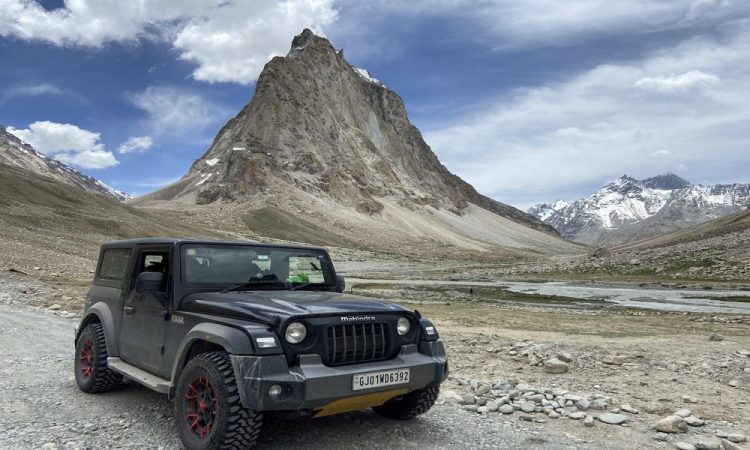
Leh Ladakh is on every serious rider’s bucket list. But the roads there are nothing like your daily commute. In a single day, you can cross smooth tarmac, loose gravel, rocky stretches, and wet sections after a sudden shower.
Most riders plan their gear and servicing carefully but give their tyres very little thought. That oversight can cost you the entire trip.
Why Ladakh’s Roads Demand More From Your Tyres
Standard city tyres are not built for the variety that Ladakh throws at you. The Manali-Leh and Srinagar-Leh highways shift between well-paved stretches and sections torn up by altitude, water crossings, and construction zones. Passes like Khardung La and Chang La add snow and ice to the equation.
The tread (the grooved rubber on the outer surface of your tyre that channels water and grips the road surface) needs to perform across all these surfaces.
Shallow, worn tread that manages city roads comfortably will lose grip badly on loose gravel or a rain-slicked descent in the mountains.
Common Tyre Challenges Riders Face in Ladakh
Many first-time riders underestimate the impact of terrain on tyres.
Some common issues include:
Increased Puncture Risk
Sharp stones, rocky sections, and construction zones can increase the likelihood of punctures. While no tyre is completely puncture-proof, stronger construction and better tread design can reduce vulnerability.
Loss of Grip on Gravel[H3]
Loose gravel is among the most challenging surfaces for riders.
Tyres with inadequate tread patterns may struggle to find traction, causing wheel slip during acceleration or braking.
Uneven Wear
Long highway stretches combined with rough mountain roads can accelerate tyre wear.
Tyres nearing the end of their lifespan before the trip may not survive the entire journey comfortably.
Reduced Wet Weather Performance
Weather in Ladakh can change rapidly. Unexpected rain, melting snow, or water crossings demand tyres capable of dispersing water efficiently and maintaining grip on wet surfaces.
Key Factors When Choosing Tyres for the Trip
When selecting two-wheeler tyres for Ladakh, three things matter most: tread depth, sidewall strength, and suitability for mixed terrain.
Tread depth is measured in millimetres. Here is a simple guide:
| Tread Depth | What It Means for Ladakh |
| 6-7 mm | Fresh tyre, maximum capability |
| 4-5 mm | Adequate for mixed terrain |
| 3 mm | Highway only, borderline safe |
| Below 3 mm | Replace before the trip |
The sidewall (the vertical side surface of your tyre between the tread and the rim) is equally important. Reinforced sidewalls resist cuts from sharp rocks, which are common on mountain roads.
Tubeless tyres (tyres that hold air without an inner tube inside) are particularly practical in remote areas because a puncture kit can seal the hole without removing the wheel entirely.
Choosing the Right Tyres for a Leh Ladakh Ride
Not every rider needs the same type of tyre. The ideal choice depends on your motorcycle, riding style, route, and experience level.
| Rider Type | Best Tyre Type | Key Benefits | Ideal For |
| Touring-Focused Riders | Touring Tyres | Comfort, mileage, stability | Highway-heavy routes |
| Adventure Touring Riders | Adventure Touring Tyres | Balanced grip and comfort | Mixed road conditions |
| Off-Road Focused Riders | Off-Road Tyres | Maximum off-road traction | Remote trail exploration |
The Price of Motorcycle Tyre: Budget Wisely
Many riders look at the price of motorcycle tyre options and reach straight for the cheapest one. On a city commute, that trade-off might be acceptable.
For Ladakh, it is not a risk worth taking. A tyre failure in a remote stretch could mean waiting hours for help in a place with no phone signal and no mechanic nearby.
Adventure-touring tyres, built for both highways and rough off-road sections, typically carry a higher price tag than standard road rubber. That extra cost is small compared to the safety they bring on a multi-day mountain expedition.
If your motorcycle uses a 150 60 r17 tyre size (a fitment common on mid-capacity adventure and sport bikes), the Protorq Extreme from Eurogrip is available in that size and worth looking into.
Tyre Pressure: Adjust It for Every Surface
Tyre pressure, the amount of air inside your tyre measured in PSI (pounds per square inch), changes everything about how a tyre performs. Even well-chosen tyres behave poorly at the wrong pressure. Here is a practical reference for Ladakh conditions:
| Surface | Front (PSI) | Rear (PSI) |
| Paved highway | 32-36 | 36-40 |
| Gravel or dirt | 28-32 | 30-34 |
| Sand or loose surface | 24-28 | 26-30 |
Check pressure every morning. Temperature swings at altitude cause noticeable pressure shifts between evening and dawn.
Your Pre-Trip Tyre Checklist
Run through this list at least a week before you leave:
- Tread depth above 4 mm for mixed terrain riding
- No cracks, cuts, or bulges anywhere on the tyre surface
- Sidewalls free from impact damage or scuffs
- Tyres not older than five years, regardless of how they look
- Puncture repair kit packed and accessible
- Portable air compressor in your luggage
- Spare tube if your bike uses tube-type tyres
Fitting new tyres a few weeks before departure also gives you a short break-in period, so the rubber is fully bedded in before the serious riding begins.
Carry Essential Tyre Emergency Equipment
Leh Ladakh includes long stretches with limited access to repair facilities.
Every rider should carry:
These small items can save hours of waiting in remote locations. Many experienced Ladakh riders consider a puncture kit just as important as riding gloves or a helmet.
The Right Rubber Makes the Ride Worth Remembering
Good tyres give you something beyond pure grip: confidence. When your rubber holds steady through a loose gravel section, or brakes cleanly on a wet mountain road, you can actually look up and take in those views.
Start your Ladakh preparation right at the bottom of your bike. Every kilometre of that journey depends on what is touching the road, so choose thoughtfully, check thoroughly, and ride safely.